
01
Void filling
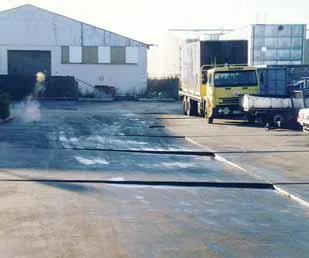
- Large cavities under industrial floors
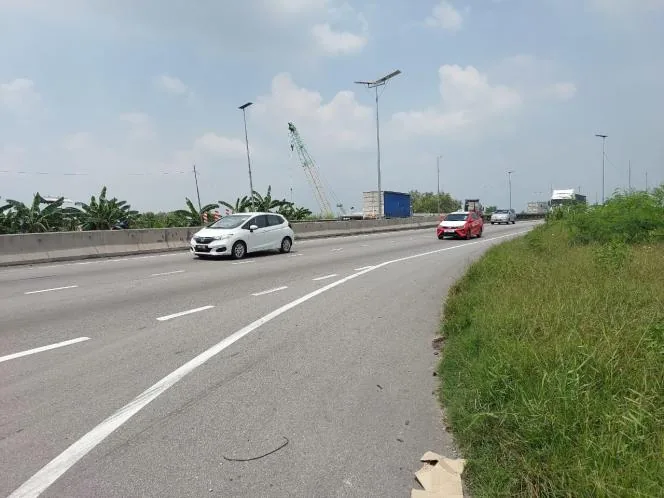
- Voids under roads, highways and runways
- Sinking residential driveways
- Ground under culvert and bridge approaches
- Lightweight grout curtain around sunken structures
Voids & cavities
Most sinkholes start as a hidden void that grows for months before the surface drops. We find the voids, then fill them with expanding polyurethane that pushes water out and locks the soil together.
Open folder · 8 photosWhere we use it
01
02
The story
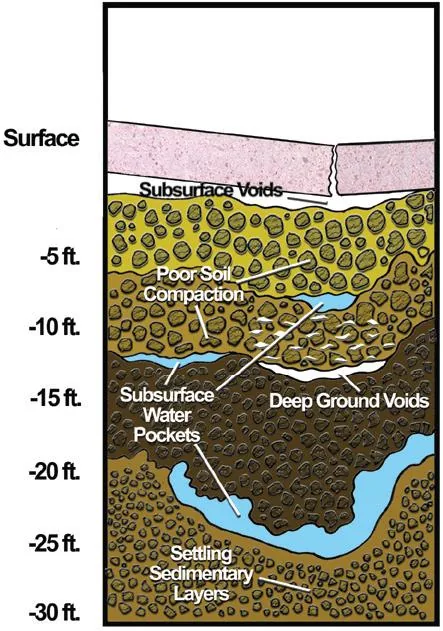
Water is usually the cause. A leaking drain, a broken pipe or rising and falling groundwater carries fine soil away (soil piping). A void forms under the road, slab or footing. The surface layer bridges over it for a while, then the "roof" of the void collapses and a sinkhole appears.
Filling the visible hole with sand or concrete leaves the voids around it and the water path untouched. The next heavy rain washes more soil away, and the hole comes back nearby.
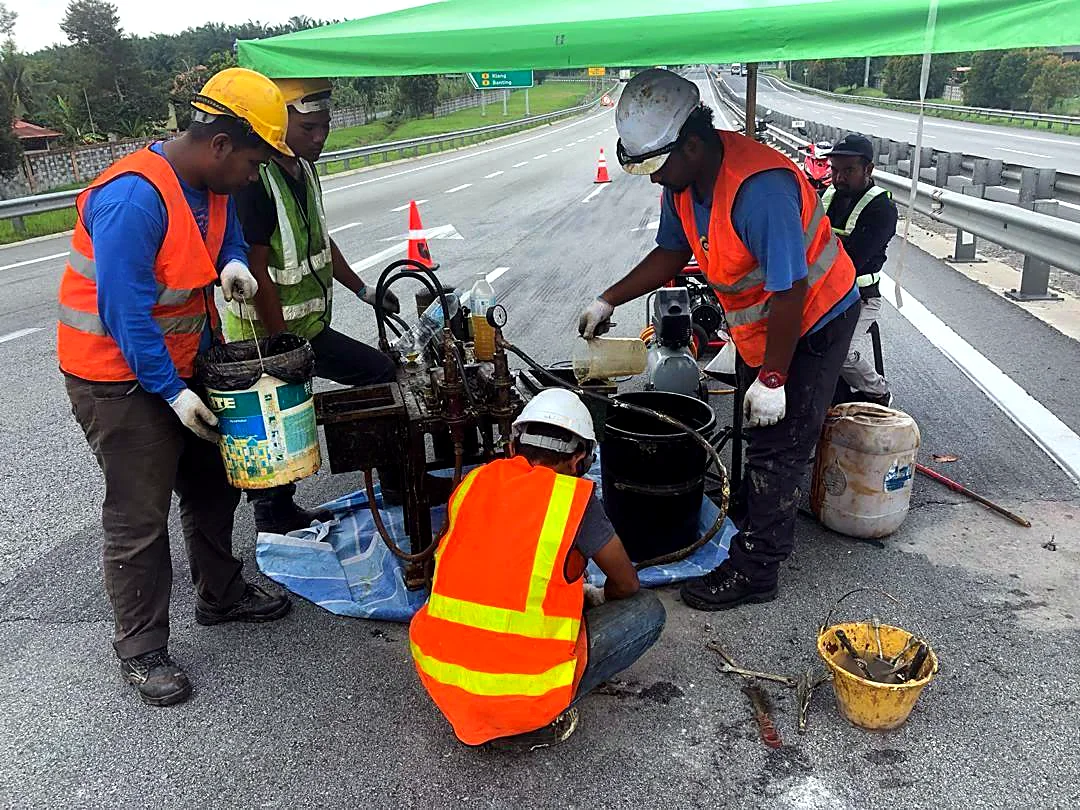
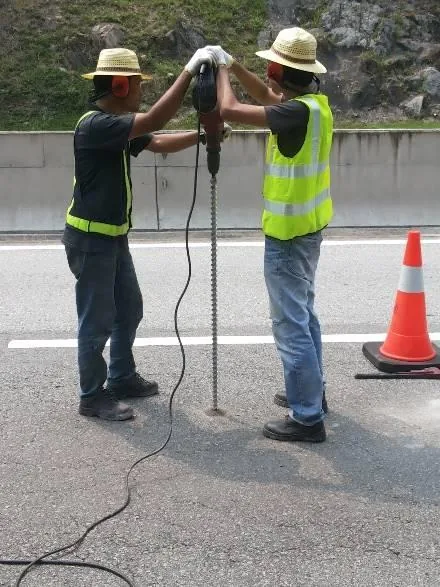
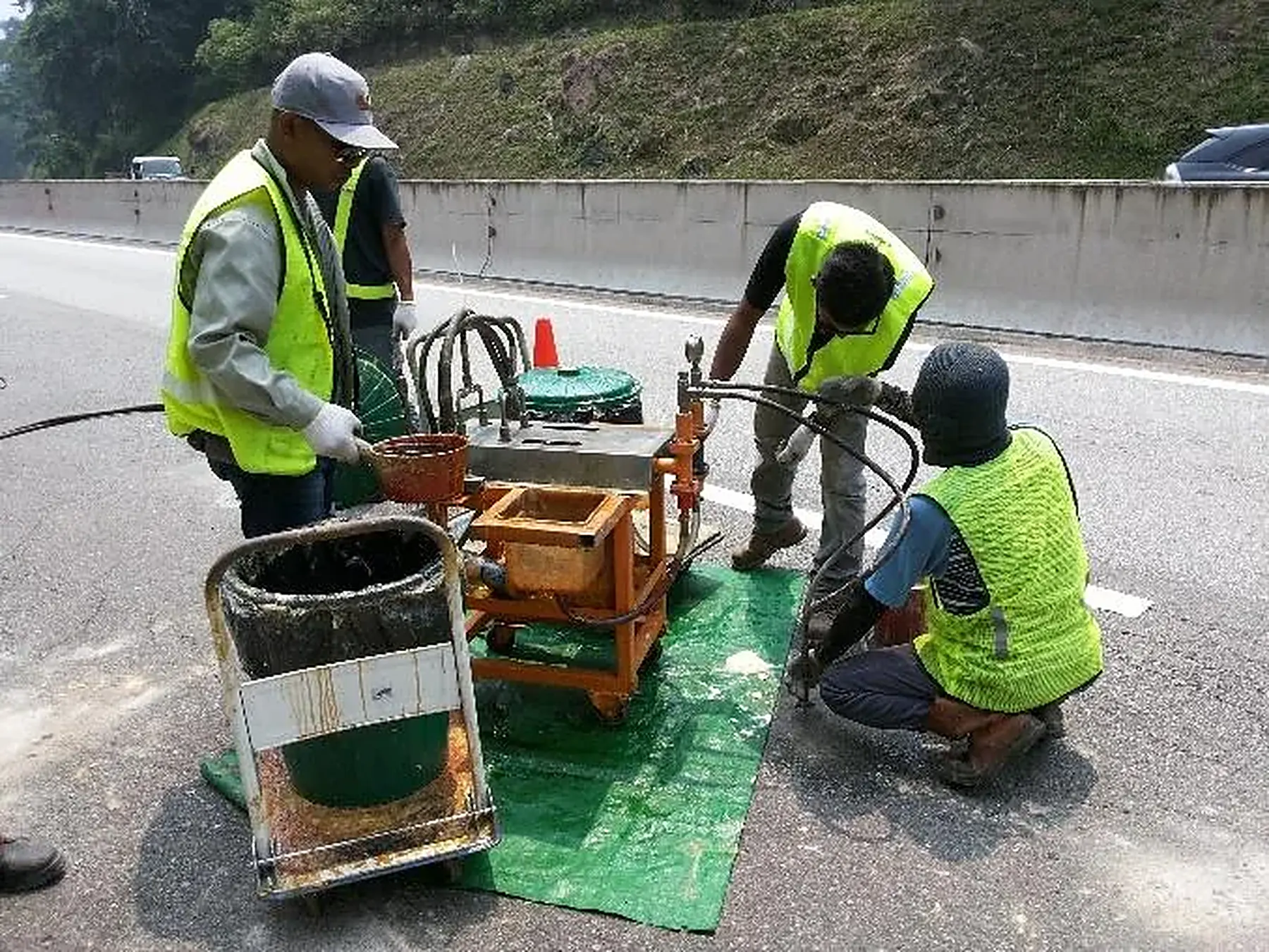
We map the problem area with probe tests and, where needed, resistivity imaging that shows voids and saturated zones. Then we inject hydrophobic polyurethane through small holes. The foam expands into the cavities, expels water as it grows, and binds loose soil around the void. It is water-repellent once cured, so it also blocks the path that caused the washout.
Photo folder
Photos from our sites. Tap any photo to view it larger.
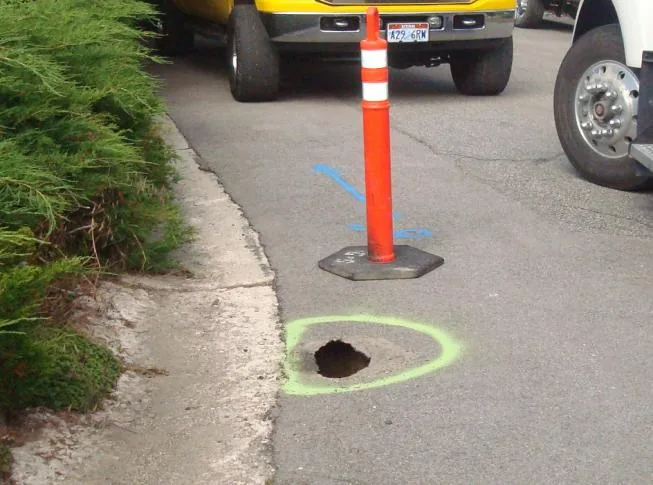
Sinkhole marked out at a roadside
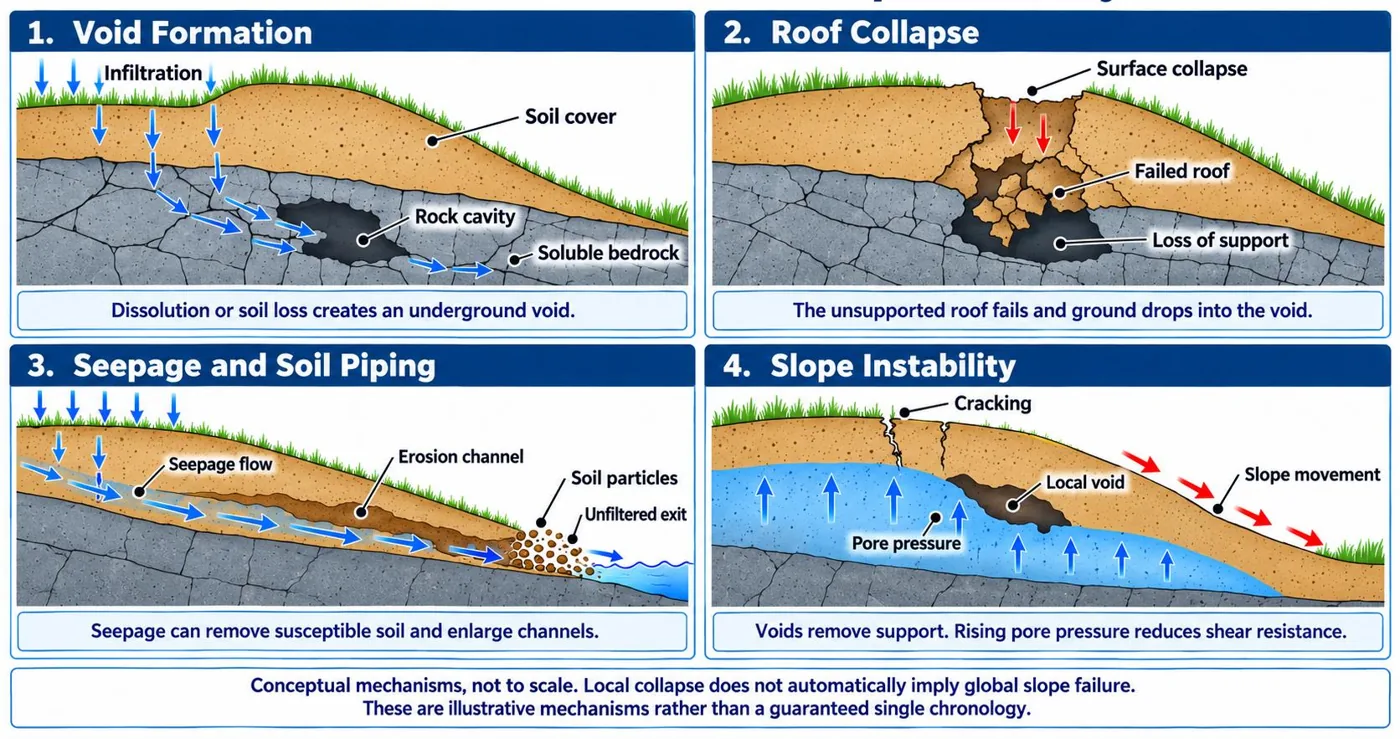 How a sinkhole forms: voids, roof collapse, soil piping and slope failure
Subsurface voids and water pockets below a pavement
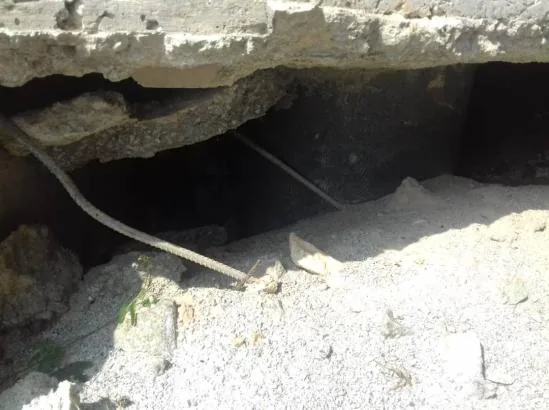 Large cavity found beneath a slab
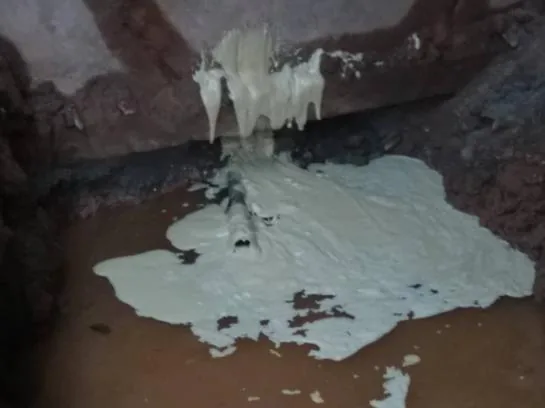 PU foam filling a water-filled void
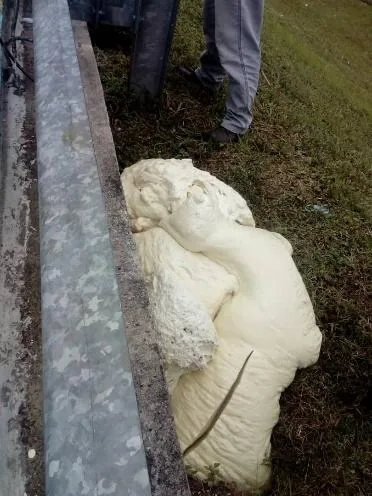 Foam surfacing after filling the void beside a guardrail
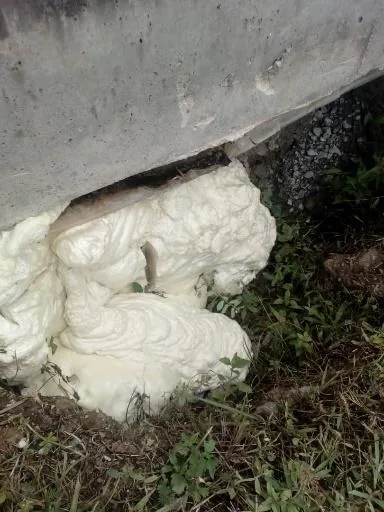 Void under an approach slab packed with foam
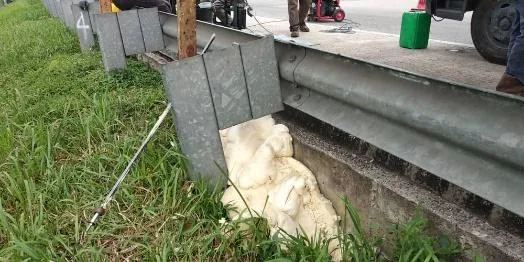 Expanded foam showing the void has been filled
Spotted a dip, a crack ring or a hole forming? Don't wait for the next storm.
Projects
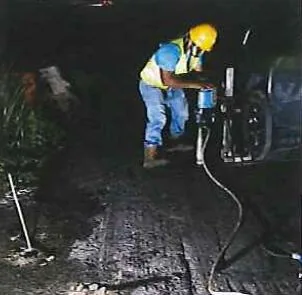 Bridge
Pulau Indah Expressway (Phase 2), Selangor
Bridge abutment rehabilitation. Void filling under the approach slab, PU injection beneath the piled embankment slab, and ground stabilisation at the transition zone, with settlement monitoring afterwards.
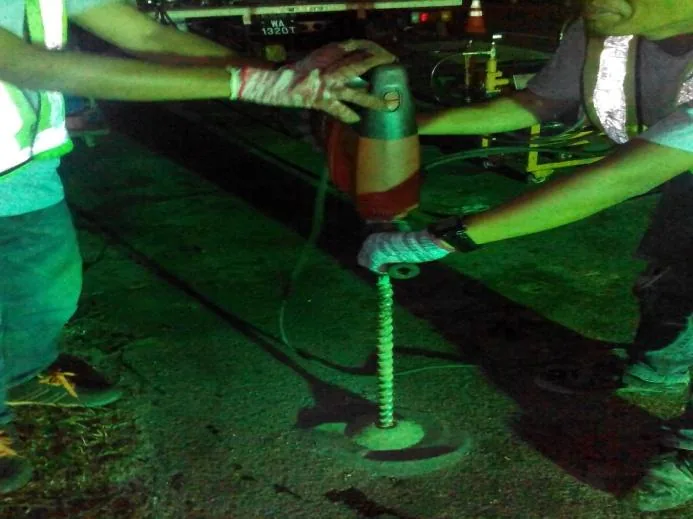 Highway
Johor
Void and cavity stabilisation at a transition zone. Stabilisation of voids between a piled embankment slab and the embankment fill. Plate loading tests after injection recorded bearing pressures above the design criteria.
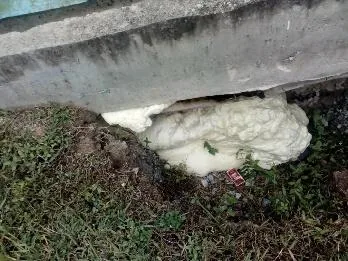 Bridge
South Klang Valley Expressway, Selangor
Bridge abutment rehabilitation. Inspection below the abutment, PU void filling and plugging, and injection works, with settlement monitoring.
How we fix it
Probe tests and resistivity surveys show where the voids and wet zones are.
The area is barricaded and loads kept off the weak ground.
PU is injected at void-filling pressure (around 500–800 psi) until the cavities are full.
Further injection compacts the surrounding soil; we re-test to confirm.
FAQ
Mostly water: leaking drains and pipes, heavy rain and fluctuating groundwater carrying soil away and leaving voids. Limestone areas also have natural cavities.
Yes. We use hydrophobic polyurethane, which pushes water out as it expands and is water-repellent once cured.
Usually yes. Injection is done through small holes, so the road or slab stays in place and can reopen quickly.
Tell us what's moving. We'll tell you how to fix it.