

01
Void filling
- Large cavities under industrial floors
- Voids under roads, highways and runways
- Sinking residential driveways
- Ground under culvert and bridge approaches
- Lightweight grout curtain around sunken structures
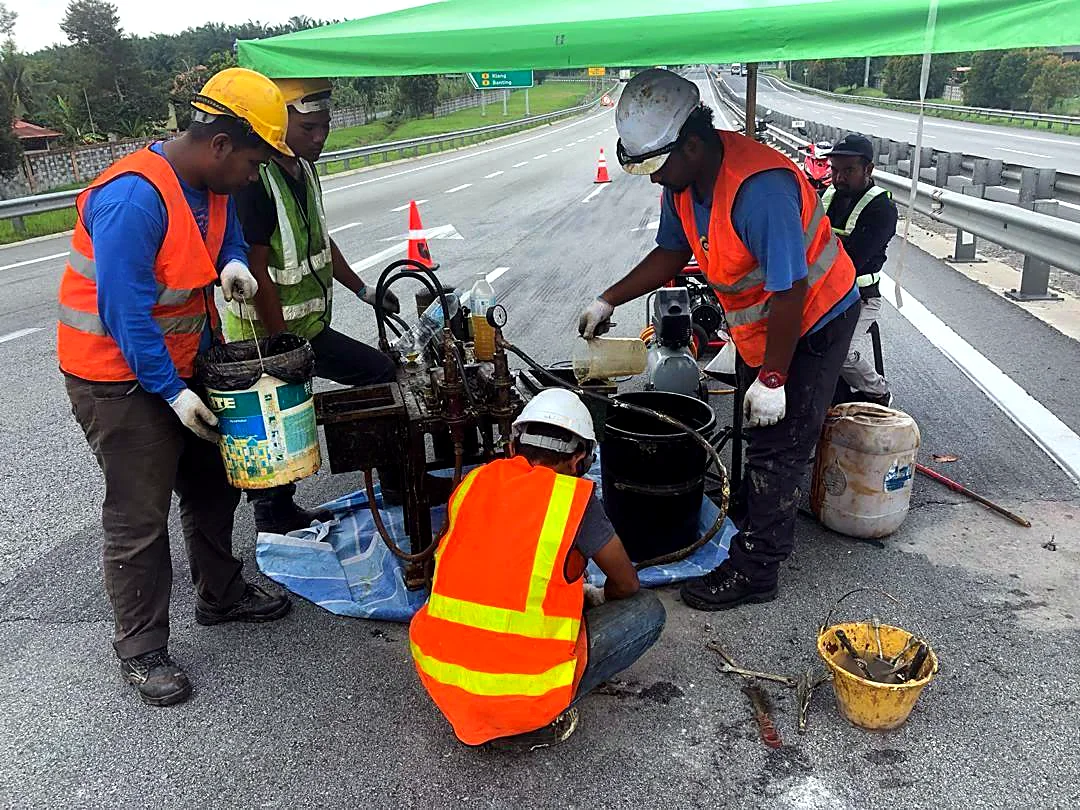
PolyGeo injection
Our PolyGeo system injects lightweight, expanding polyurethane into weak ground through small holes. It fills voids, densifies the soil and can lift what sits on top, with no excavation.
Where we use it
01
02
03
04
The story
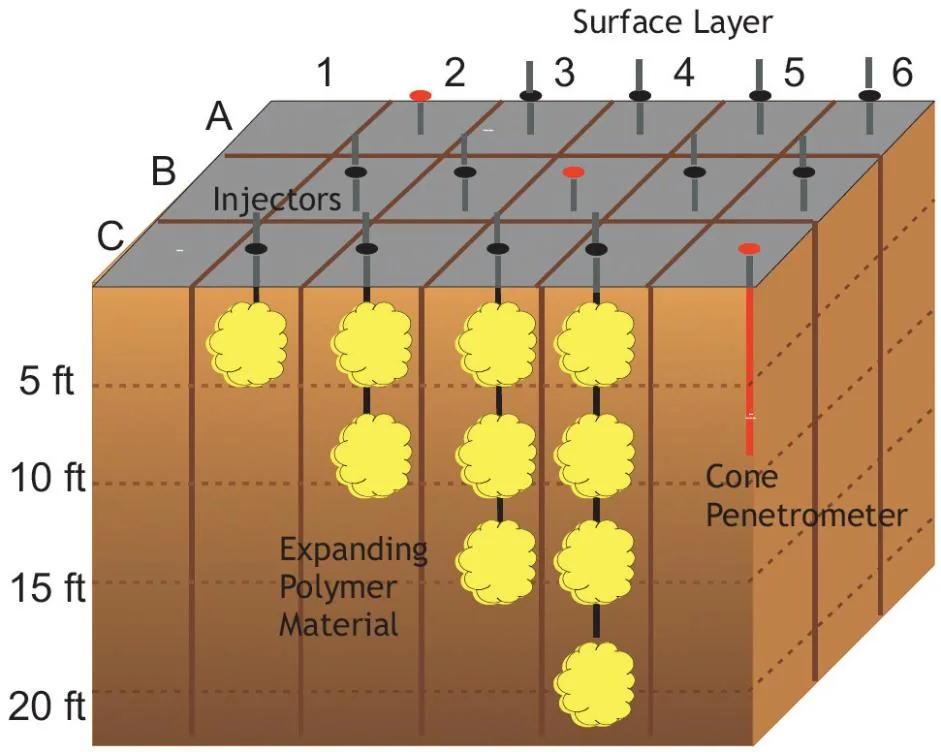
Polyurethane is formed by mixing two liquids that react and expand into a rigid foam. There are two kinds: hydrophilic PU absorbs water and becomes a flexible foam or gel; hydrophobic PU, the kind we use for ground repair, expands 6 to 20 times its liquid volume and pushes water out as it grows.
Steel injection tubes go in through small drilled holes. Hydraulic power packs pump the resin into the problem soil at high pressure. The foam fills the voids first, then squeezes and compacts the soil around it, and with more pressure it lifts the structure above.
Cement grout weighs around 2,400 kg/m³; our foam weighs a fraction of that, so it doesn't load the soft ground further. It sets within minutes to an hour, not days, through holes of 16–35 mm, from a single self-contained trailer, with little waste or dust. Tests on our past projects showed the treated soil gaining strength and stiffness after injection.
Photo folder
Photos from our sites. Tap any photo to view it larger.
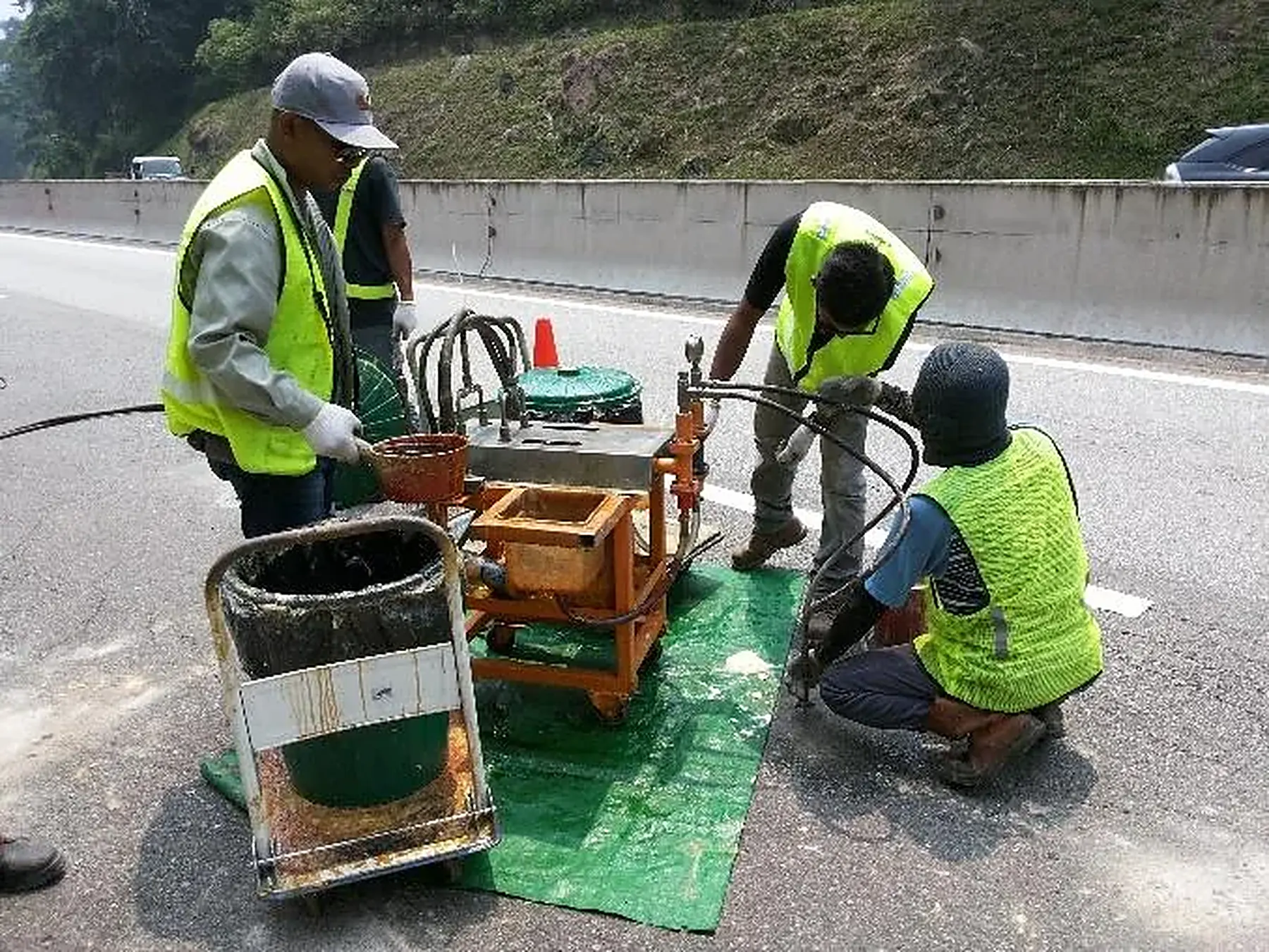
PolyGeo injection team at work on an expressway
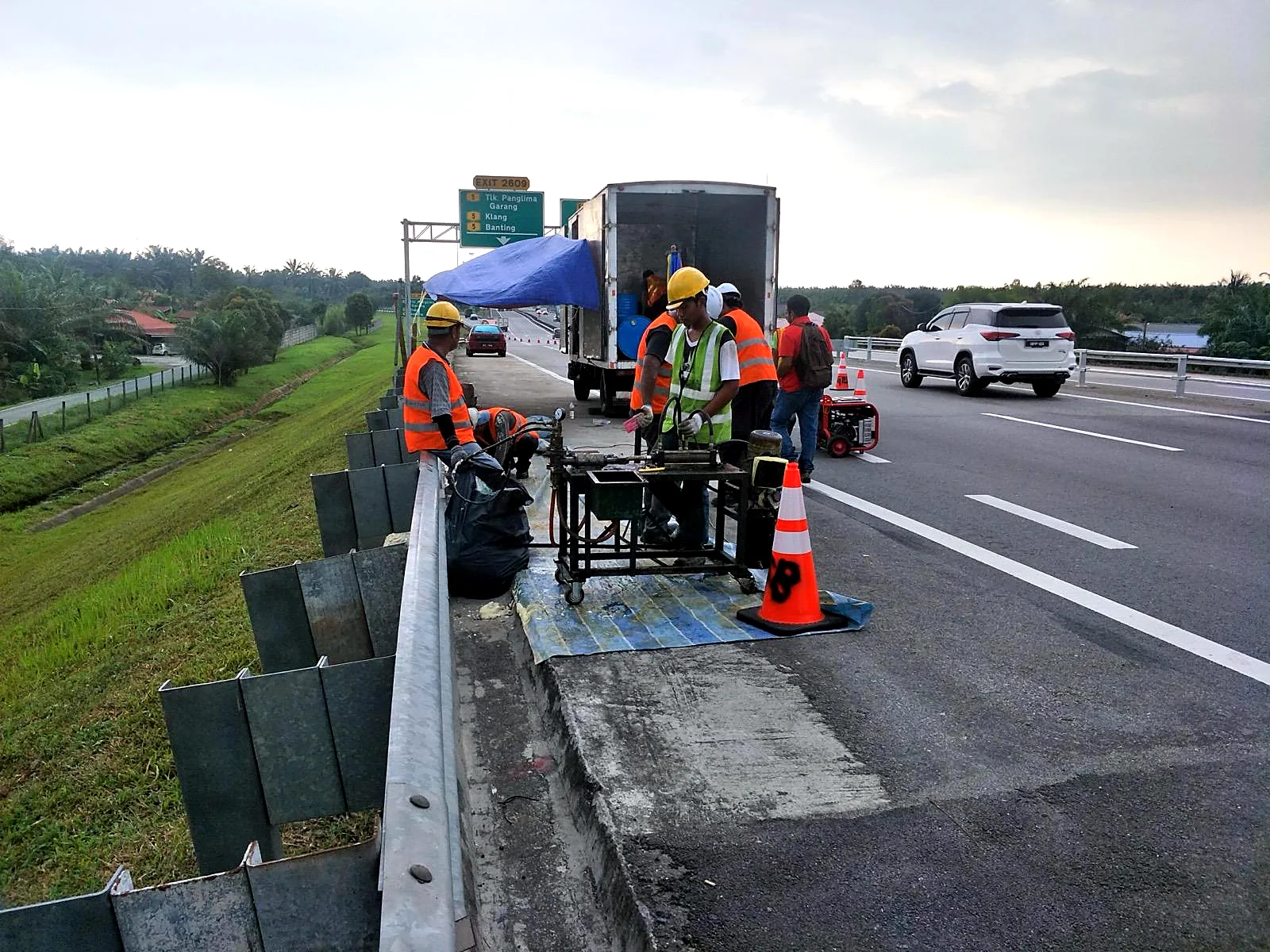 Injection rig on the road shoulder, with the lane coned off
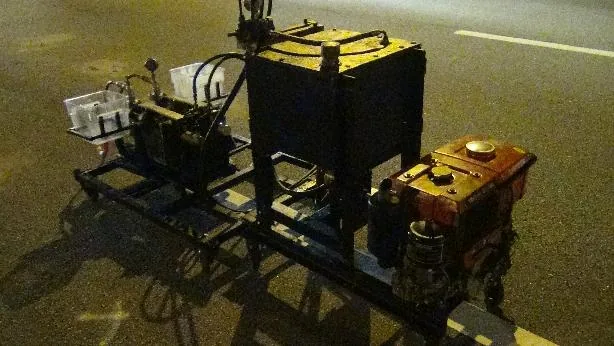 PolyGeo hydraulic injection unit
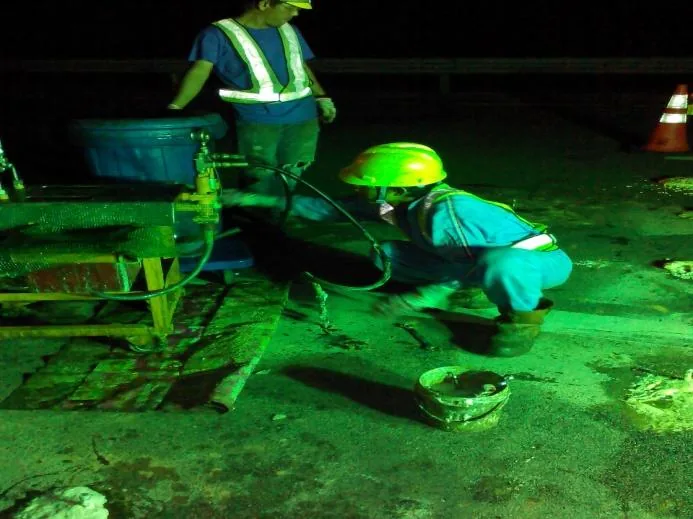 Injecting PU through a packer
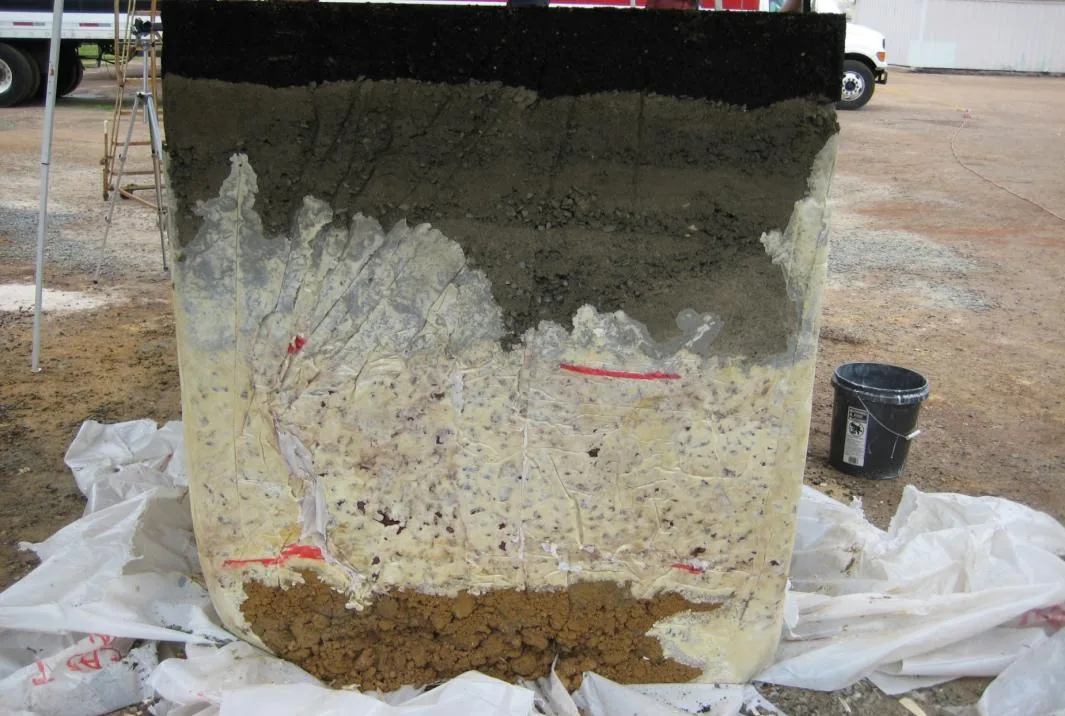 Soil sample with injected PU foam veins
How injected foam strengthens the ground in layers
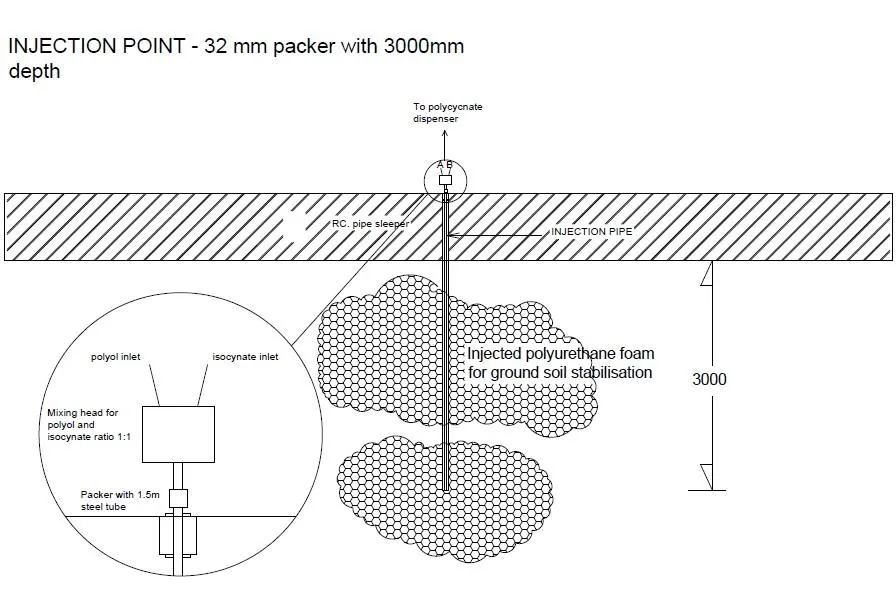 Typical injection point: 32 mm packer, 3 m depth
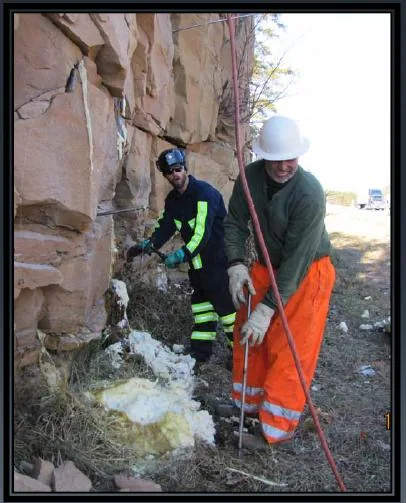
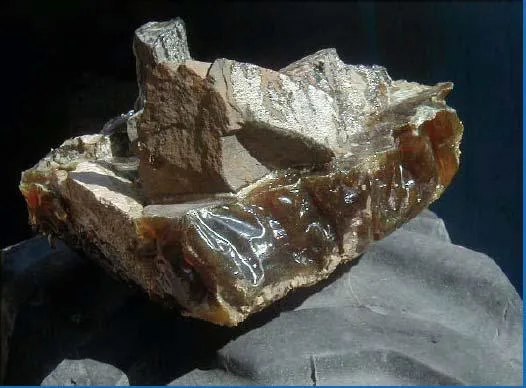 Rock bound together by PU resin
Typically used for
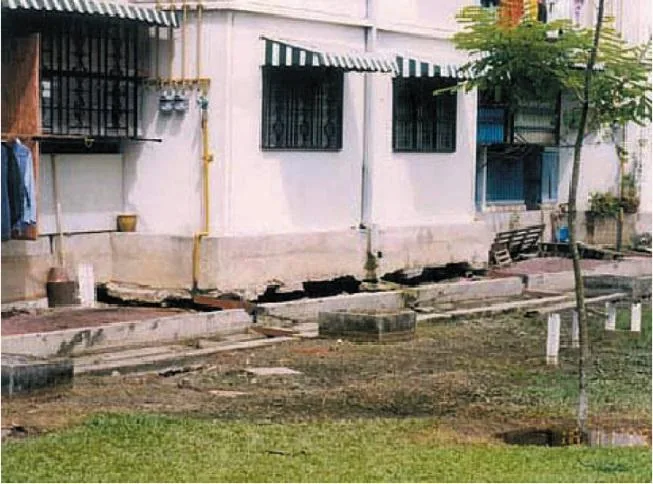 8 photos
Homes & buildings
House & Building Settlement
Cracked walls, sinking porches and extensions pulling away.
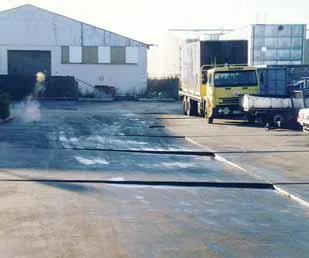 6 photos
Floors & slabs
Slab Lifting & Floor Levelling
Sunken factory floors, yards and porches lifted back to level.
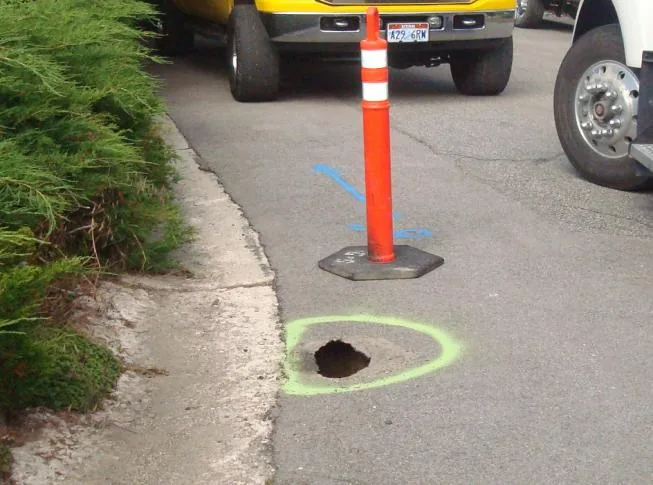 8 photos
Voids & cavities
Sinkhole & Void Filling
Hidden voids and sinkholes filled before the ground collapses.
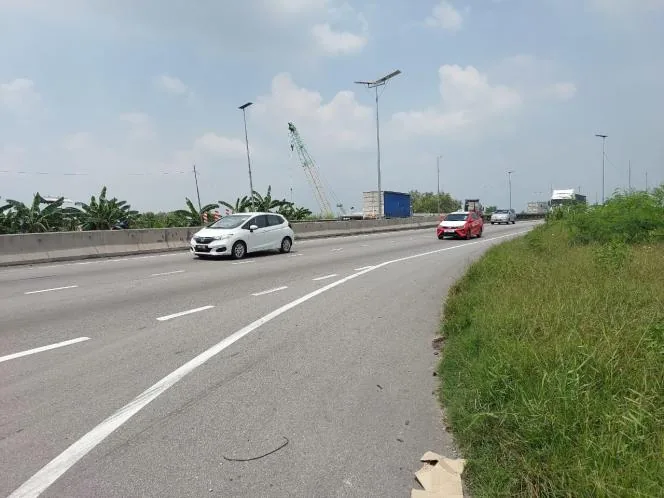 23 photos
Roads, bridges & culverts
Road, Bridge & Culvert Approach
Bumps at bridge approaches, sinking lanes and faulted pavements.
 7 photos
Slopes & rock
Slope & Rock Stabilisation
Rock gluing, soil nails and helical anchors for unstable slopes.
Not sure if injection is the right fix? Send us photos and we'll tell you honestly.
Projects
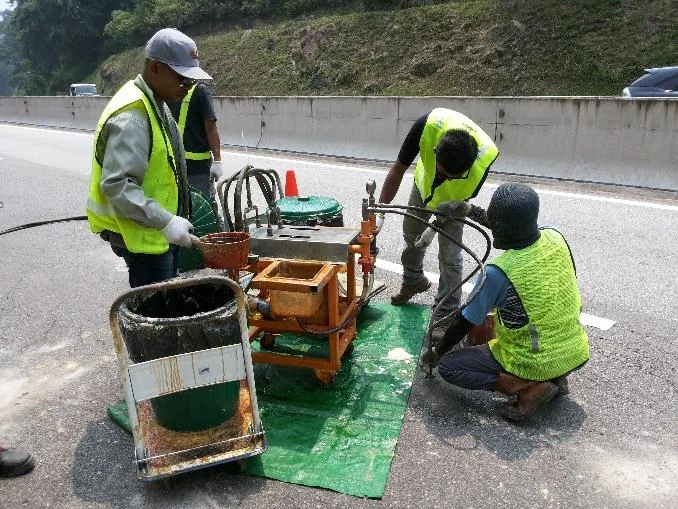 Highway
KM 48.7–48.85 eastbound, Pahang
Pavement defects: shallow PU injection. Geotechnical assessment and injection works for a depressed pavement section. Probe tests before and after injection showed the sub-grade re-strengthened.
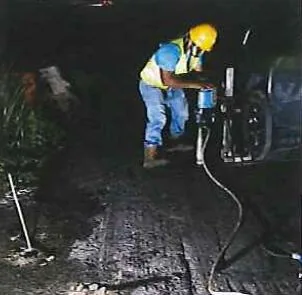 Bridge
Pulau Indah Expressway (Phase 2), Selangor
Bridge abutment rehabilitation. Void filling under the approach slab, PU injection beneath the piled embankment slab, and ground stabilisation at the transition zone, with settlement monitoring afterwards.
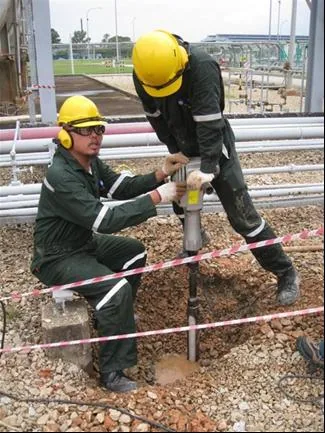 Industrial
Kuantan, Pahang
Soil settlement: engineering, procurement and construction. Soil settlement remediation at a plant area on very soft sandy silt. Laboratory tests on treated samples showed higher undrained shear strength and stiffness.
Work sequence
JKR/Mackintosh probe tests before injection set the baseline.
Injection points (typically 32 mm packers to around 3 m depth) are installed.
PU is pumped through the packers while a laser level watches the surface.
Probe or plate load tests after injection confirm the ground is stronger.
FAQ
The cured foam is inert, water-repellent and does not wash out. It treats the voids and weak soil that caused the settlement.
Once cured the foam is inert. The process creates very little waste or dust compared with excavation and concrete work.
Tell us what's moving. We'll tell you how to fix it.