
01
New foundations
- Carry loads down to stable, deeper ground
- Underpinning on soft, compressible clay
- New buildings over deep soft deposits
- Spreading loads past unstable top soil
GeoMicroHelicS
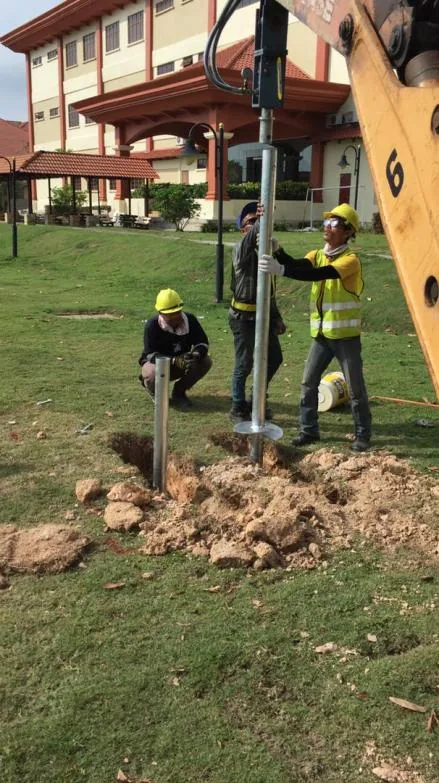
When a wall or footing keeps sinking, it needs new support from firmer ground below. Our GeoMicroHelicS helical piles are screwed down past the soft layer and fixed to the footing, so the building rests on them instead of the weak soil.
Open folder · 14 photosWhere we use it
01
02
03
04
The story
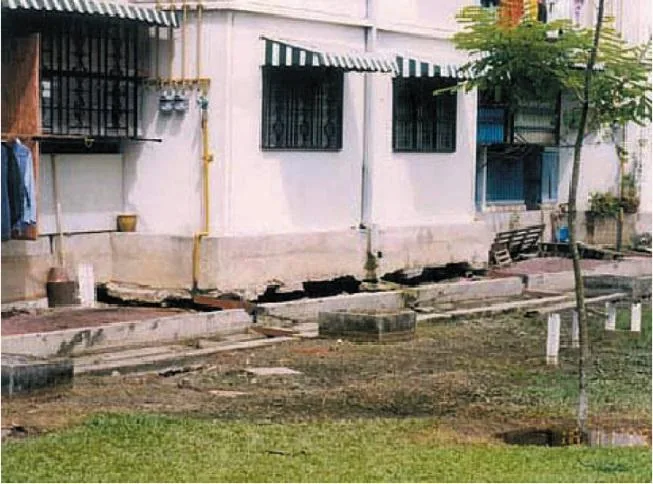
Many buildings in Malaysia sit on soft soil, poorly compacted fill or ground that loses strength as groundwater rises and falls. Conventional underpinning (mass concrete, pier and beam, cantilever needle beams) adds more weight to the same weak ground, takes a long time and often needs heavy machinery the site can't take.
A helical pile is a steel shaft with one or more helix-shaped bearing plates near the tip. It is installed by rotating it into the ground, like a screw. Its capacity comes from end bearing on the helix plates plus friction along the shaft, and the installation torque gives a direct check on capacity as each pile goes in.
The idea is old and proven: screw piles held up lighthouses in the 1830s. Ours is the GeoMicroHelicS system, an extendable round-shaft micro helical pile designed for underpinning and ground reinforcement.
Pile anatomy
The pile is screwed down through the soft soil into a firm bearing layer, then fixed to the footing. The building's load is carried down the shaft and into firm ground by the helix plates.
Photo folder
Photos from our sites. Tap any photo to view it larger.
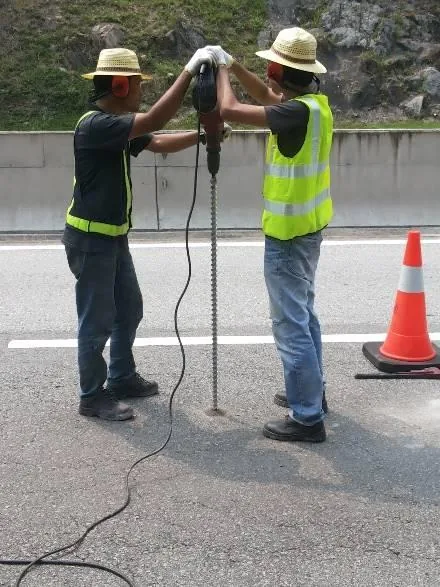
Installing a helical pile with a rotary drive head
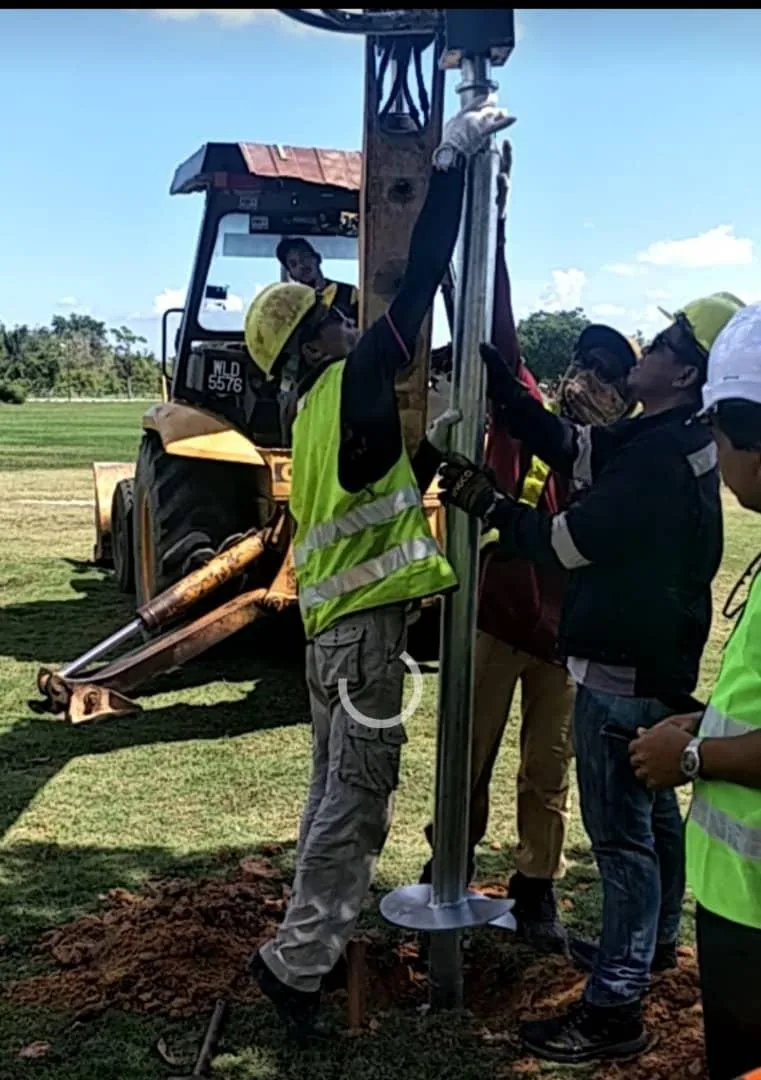 Crew guiding a pile shaft into position
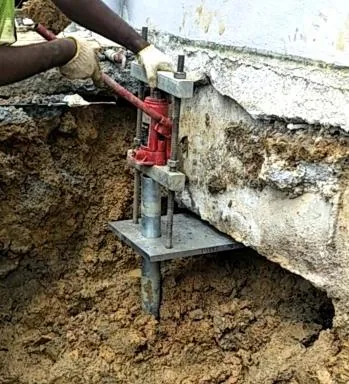
Underpinning bracket fixed to an existing footing
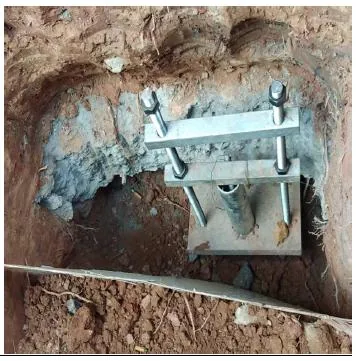 Bracket and pile head beneath a footing
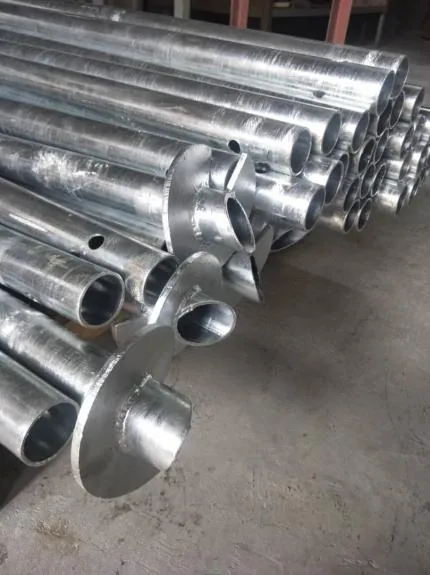 Galvanised helical pile shafts ready for site
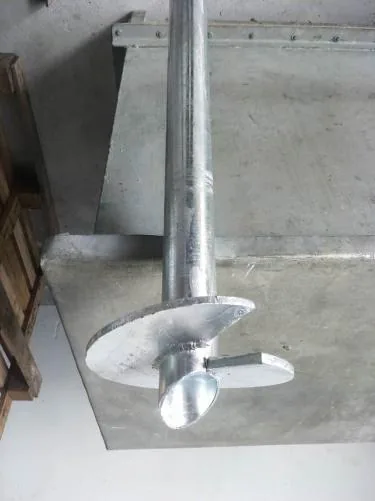 Close-up of a helix bearing plate
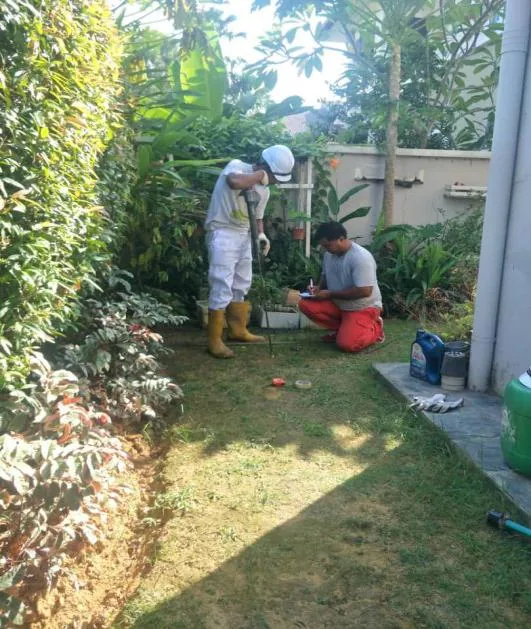 Working in a house garden with compact equipment
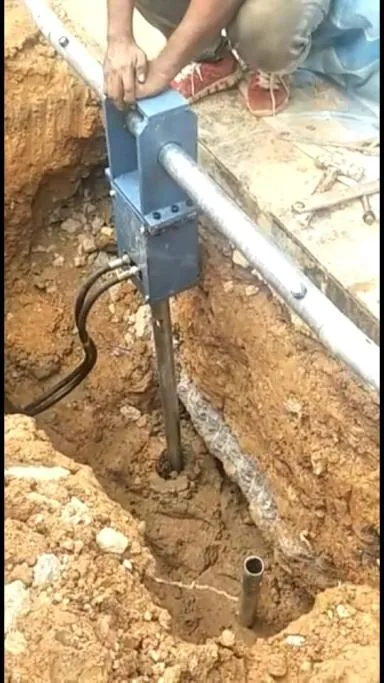 Pile installed in a trench beside a wall
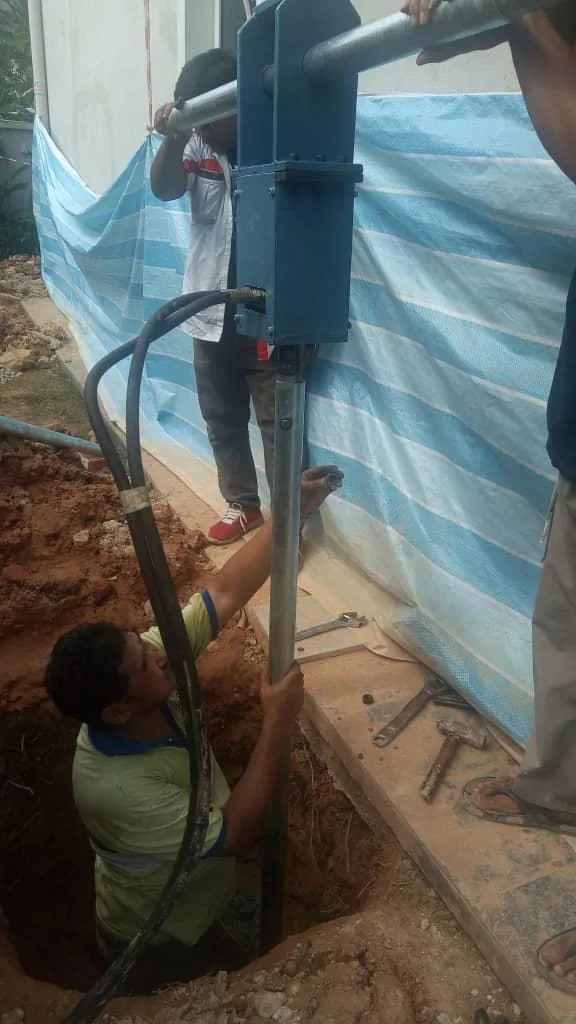 Installing next to an existing building
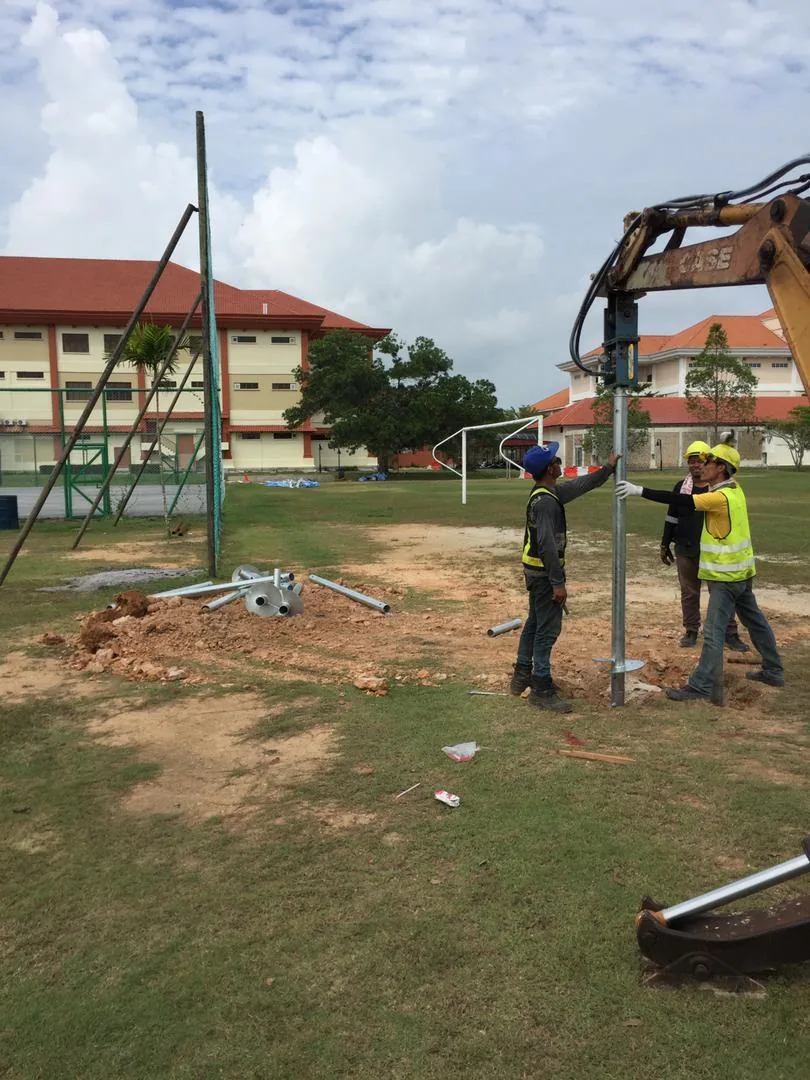 Field installation for a public building
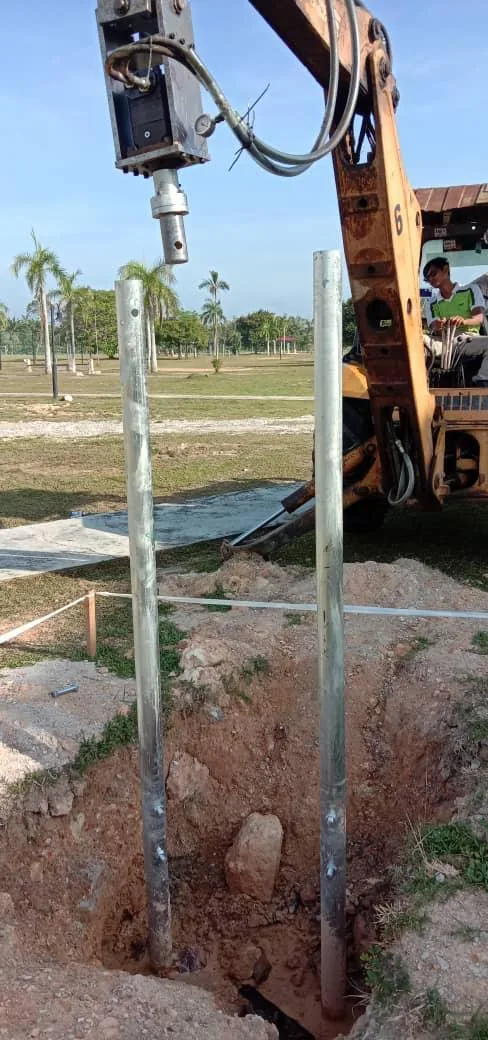 Pile shaft in an excavated pit
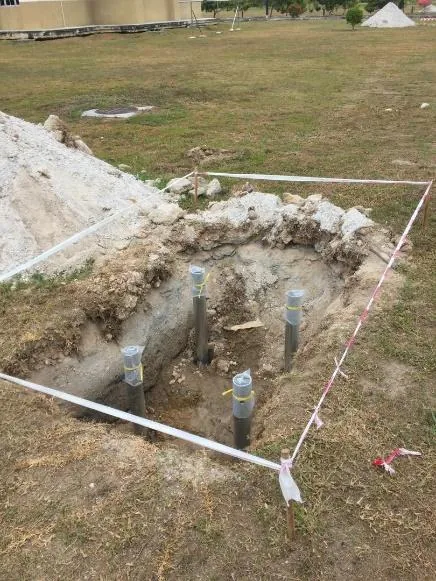 Pile heads exposed before capping
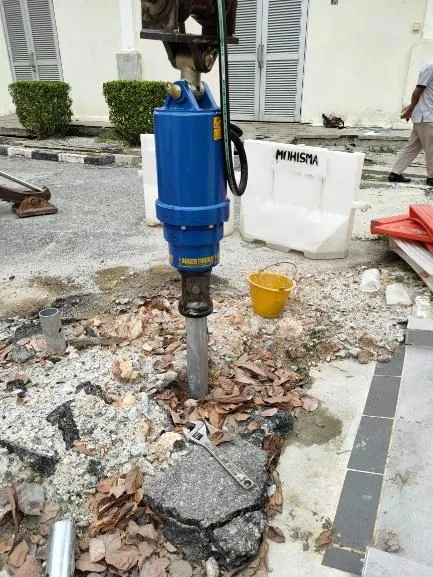 Drive head on a pile beside a house
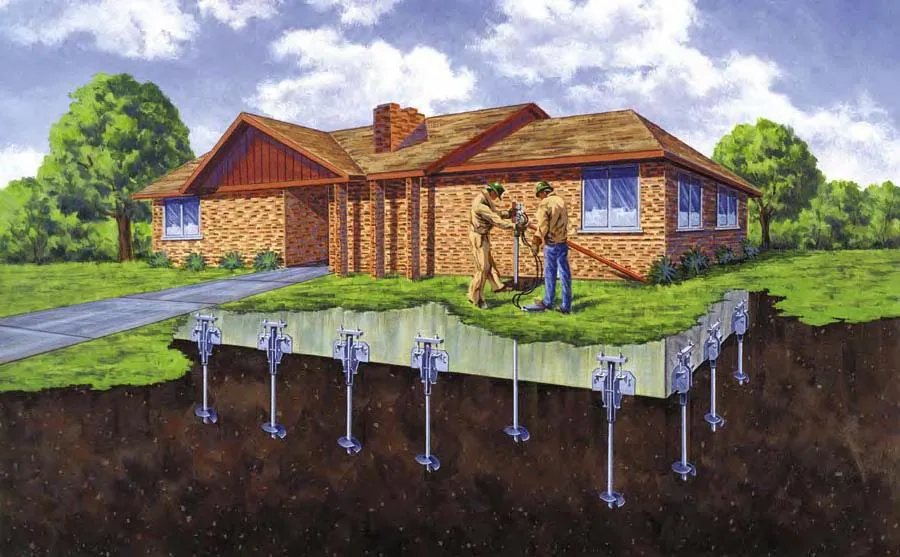 Concept: a house resting on helical piles
Wall still cracking after repairs? Let us check what's under the footing.
How we install
Dynamic probe or SPT results tell us how deep the firm layer is and what each pile must carry.
Helix sizes, spacing and depth are worked out per support point, with a factor of safety.
A compact drive head screws the pile down, adding extensions until the design torque and depth are reached.
The pile head is fixed to the existing footing with an underpinning bracket to take the load.
Settlement markers confirm the building has stopped moving before cracks are repaired.
FAQ
Down through the soft layer into firmer ground, which is different on every site. We decide the depth from probe or SPT tests and check it during installation from the torque.
Usually not. Piles are installed beside the footing, often from outside the house, with small equipment that fits back lanes and gardens.
Helical piles give new support from deeper, firmer ground. PU injection fills voids and strengthens soil close to the surface, and can lift slabs. Many jobs use both. See PU injection.
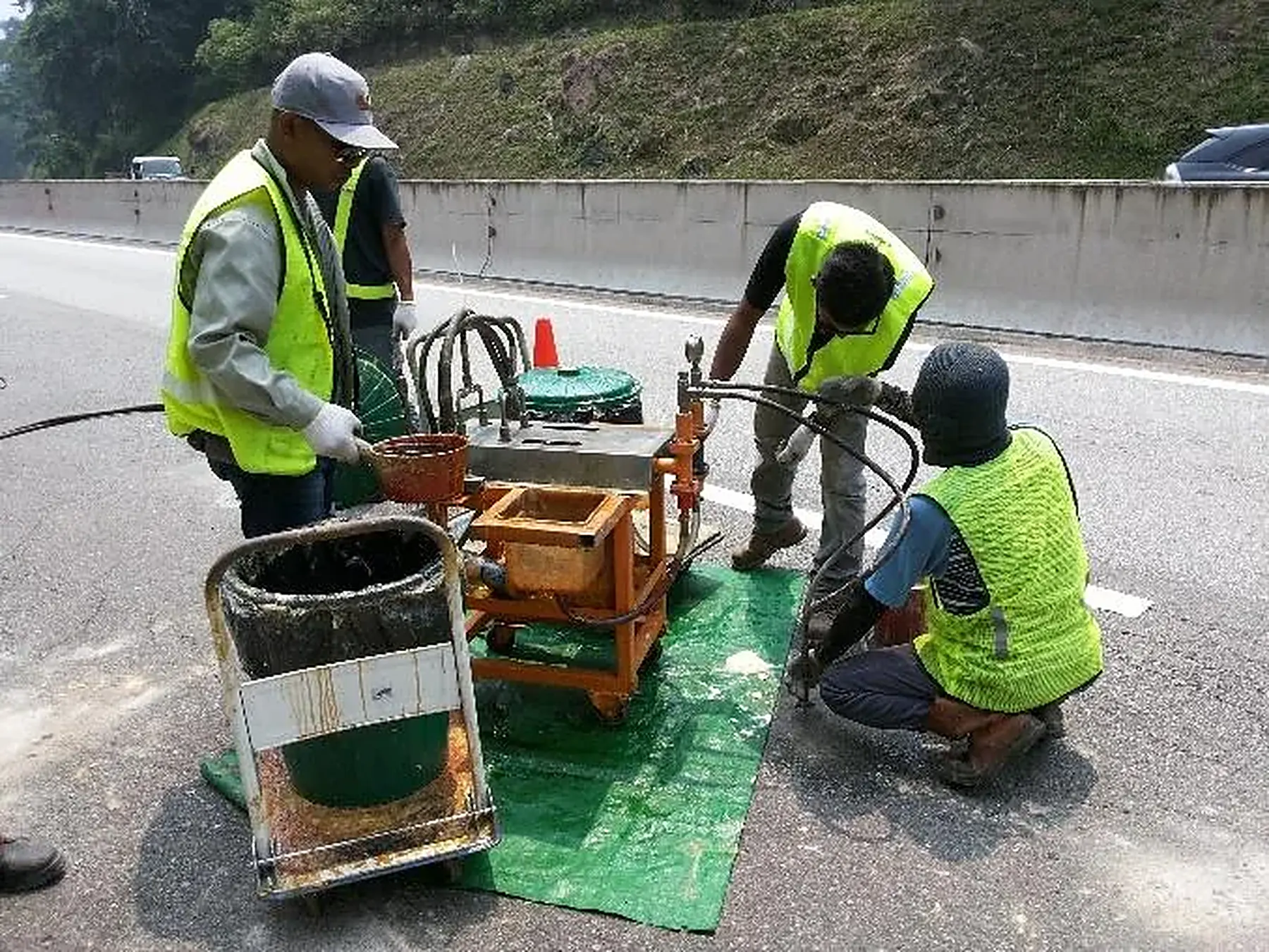
Tell us what's moving. We'll tell you how to fix it.